


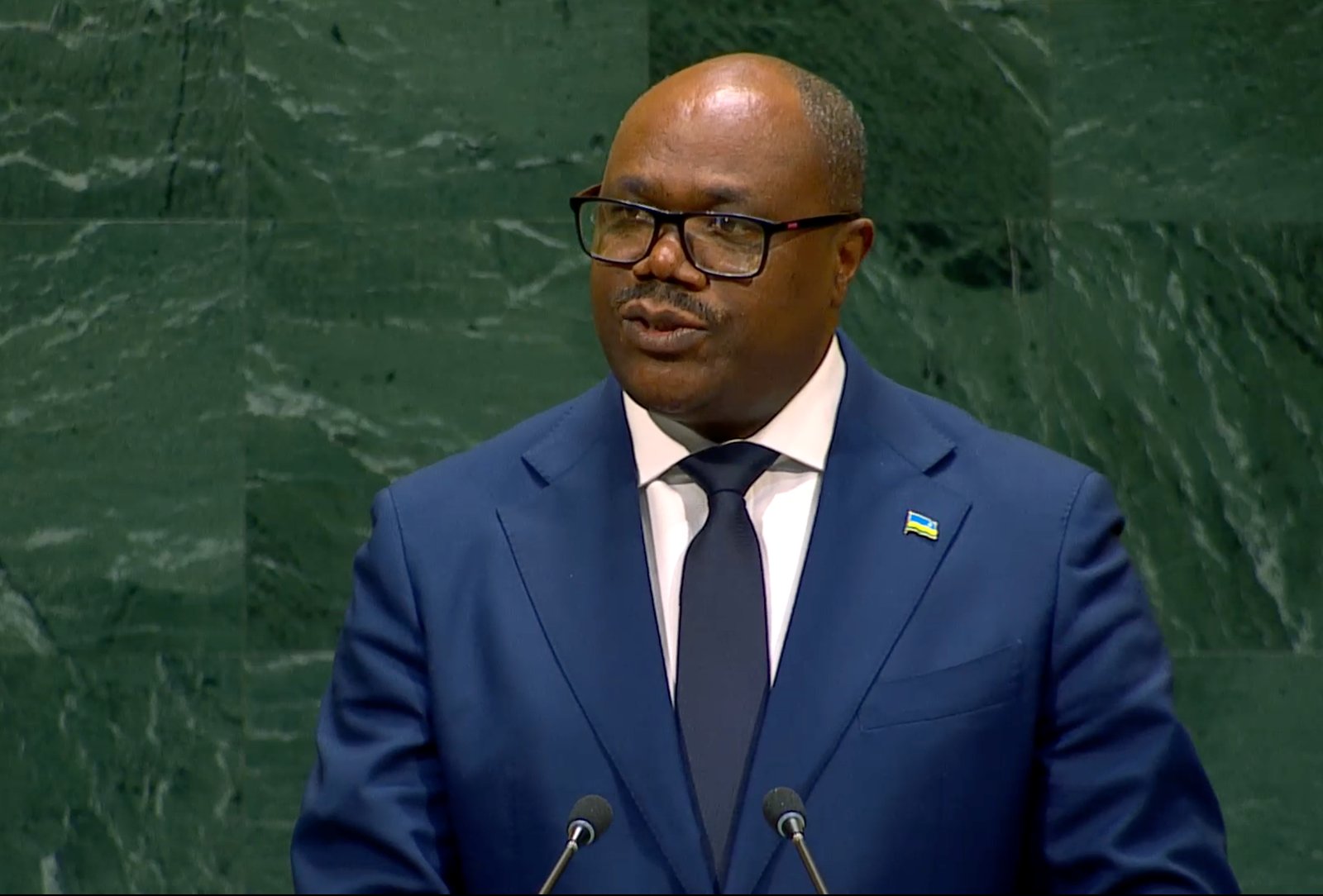
“The United Nations has yet to demonstrate that it can adapt to a changing and uncertain world”, declared Justin Nsengiyumva, Prime Minister of Rwanda, as he urged Member States to bring this about.
He said his country, being on a similar trajectory 30 years ago, survived by depending on its “capacity to rebuild against all odds”, adding: “what made that possible was a simple principle and conviction that institutions earn legitimacy not by what they promise, but by what they deliver, year after year.”
Recalling previous pandemics, climate shocks and technological disruptions that the world has witnessed, he said, “too often, the United Nations has been more effective at responding to crises than anticipating them” — an attitude which has had more undesirable effects in conflict situations.
A clear example is the crisis in Eastern Democratic Republic of Congo where the Democratic Forces for the Liberation of Rwanda has committed grave abuses and spread genocidal ideology.
“The roots of the conflict in Eastern DRC are political, and they lie in longstanding grievances, exclusion, and failures of governance. The solution, too, therefore, must be political,” he asserted, calling on all actors, including the Security Council, to support ongoing peace efforts.
“The value of prevention extends beyond conflict. It also means addressing the conditions that leave countries vulnerable to poverty, economic shocks, and exclusion from opportunity,” he said.
On the UN80 reform process, he called for a system that gives countries a levelled field towards their own development.
“The question before this Assembly is not whether multilateralism remains relevant. It is whether our institutions are prepared to adapt to the challenges of our century, and to deliver results that matter.”